

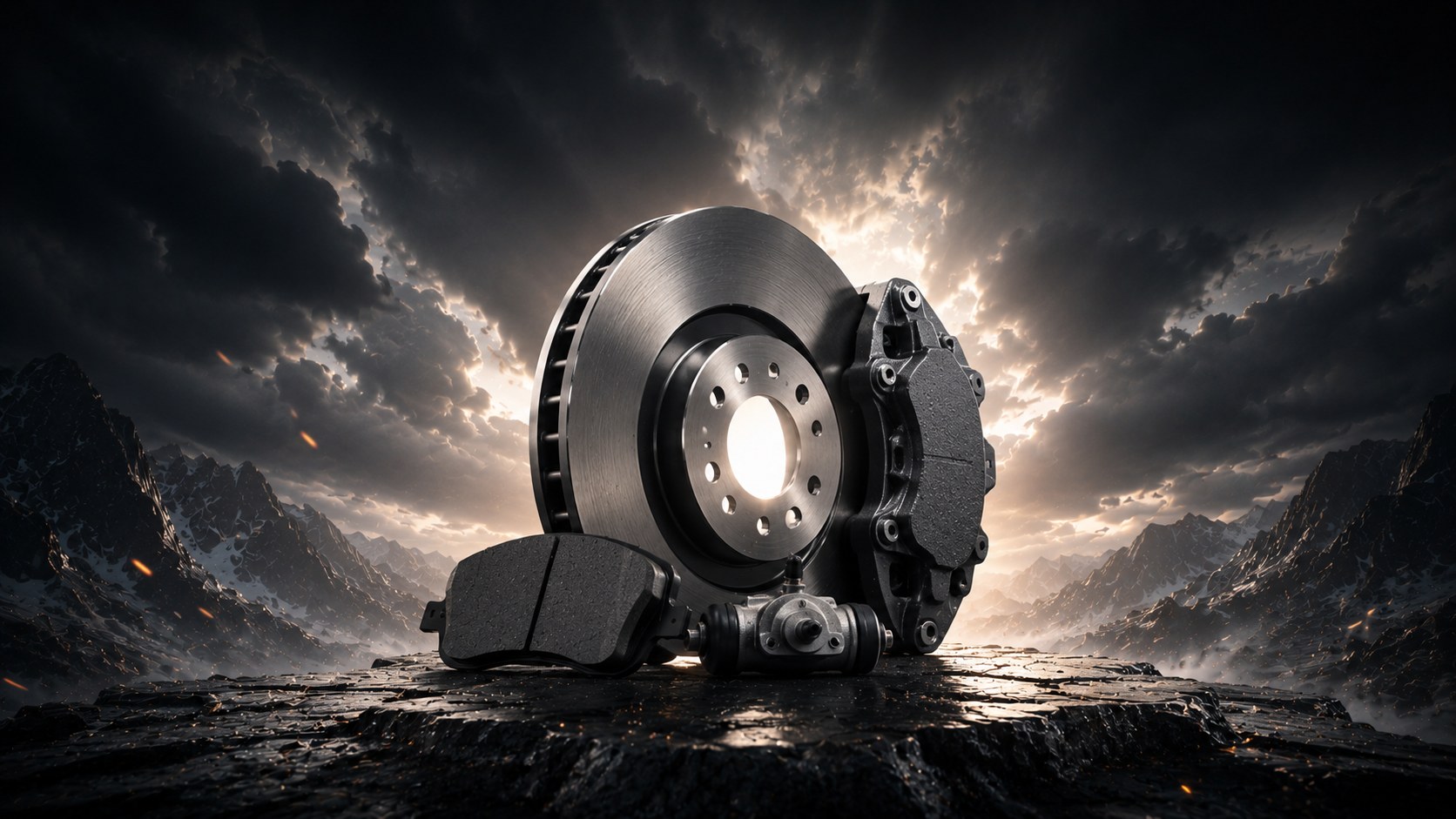
The braking performance of an empty vehicle is not the same as the braking performance under full load. As the carried load increases, the vehicle's weight, the braking distance, the heat load on the pads and discs, tyre grip and suspension balance are all directly affected. For this reason, the right brake-system components, regular maintenance and the use of quality spare parts are highly important for safe braking under full load.
Why Does Braking Under Full Load Become More Critical?
Because heavy commercial vehicles have high carrying capacities, their brake systems must control very large forces. When the vehicle moves at full load, the stopping distance increases, the brake system absorbs more energy and the system components are exposed to higher temperatures.
During braking, the vehicle's kinetic energy turns into heat. The heavier the vehicle, the more the brake system has to work to control this energy. This directly affects the performance of the brake parts, especially on long descents, in stop-and-go urban transport and in demanding road conditions.
For this reason, under full load the brake system does not merely stop the vehicle; it also protects load safety, driver control and road safety.
The Main Functions of the Brake System
The heavy-vehicle brake system is designed to reduce the vehicle's speed and bring it to a safe stop. However, under full load this task becomes more comprehensive. The main functions of the brake system are:
- Ensuring the vehicle slows down safely
- Keeping the braking distance under control
- Helping to maintain load balance
- Reducing vehicle skidding and loss of control
- Managing the heat generated during braking
- Giving the driver a safe and controlled braking feel
- Balancing the loads on the tyres, suspension and chassis
- Supporting brake harmony between the trailer and the tractor unit
For these functions to be carried out properly, the brake pad, brake disc, drum, caliper, air system and fasteners must work in harmony.
Factors Affecting the Brake System Under Full Load
Braking performance in heavy commercial vehicles depends on many different factors. When these factors are evaluated together, a safe and efficient braking system is achieved.
1. Vehicle Weight and Load Distribution
Under full load, the total weight of the vehicle increases. If the load is not distributed evenly on the vehicle, it can cause the vehicle to pull to one side, skid or sit unevenly during braking.
Especially in trailers and semi-trailers, load distribution is critically important for braking safety. A balanced load distribution helps the brake system work more efficiently.
2. Brake Pad Quality
The brake pad creates friction by contacting the disc or drum during braking. This friction reduces the vehicle's speed. However, under full load the pads are exposed to higher temperature and pressure.
Low-quality brake pads can lose performance at high temperatures, wear faster or cause the braking distance to increase. For this reason, in heavy commercial vehicles, pads with the right friction coefficient, a durable structure and reliable performance should be preferred.
3. Brake Disc and Drum Condition
The brake disc or drum is the main braking surface that works together with the pad. Worn, cracked, warped or surface-damaged discs reduce braking performance.
Under full load, these problems become more pronounced. Deformation on the disc or drum surface can lead to vibration, noise, irregular pad wear and braking instability.
4. Heat Management
Heat management is a critical issue in brake systems. Under full load or during prolonged braking, the pad and disc temperature rises significantly. Overheating can cause a drop in braking performance.
This situation is generally known as brake fade. The brake pedal feel can change, the braking distance can increase and system reliability can decrease. Quality brake components offer more stable performance under high-temperature conditions.
5. Air Brake System Performance
The air brake systems widely used in heavy commercial vehicles work with compressed air. The air pressure, valves, hoses, compressor and air tanks in the system must work correctly.
Problems such as air leaks, low pressure or valve failure can create serious safety risks under full load. For this reason, the air brake system must be checked regularly.
6. Tyres and Road Holding
No matter how powerful the brake system is, if the tyres that keep the vehicle in contact with the road do not provide sufficient grip, braking performance drops. Tyre tread depth, air pressure and tyre quality directly affect the braking distance.
Under full load, because the load carried by the tyres increases, correct tyre pressure and regular checks are highly important.
7. Suspension System
The suspension system helps maintain the vehicle's balance during braking. Worn shock absorbers, damaged air suspension bellows or weak fasteners can negatively affect the vehicle's balance during braking.
For this reason, when evaluating the brake system, the suspension system should not be overlooked.
The Importance of the Brake Pad Under Full Load
Brake pads are among the most intensively working parts of the heavy-vehicle brake system. Under full load, the pads must withstand not only high friction but also high temperature and pressure. Choosing the right brake pad provides the following advantages:
- More stable braking performance
- A more controlled stopping distance
- More reliable operation under high temperature
- More balanced wear
- A contribution to disc and drum life
- Support for driving safety
- Keeping maintenance costs under control
Choosing the wrong or low-quality pad, on the other hand, may seem economical in the short term but can cause disc wear, frequent maintenance needs and safety risks in the long term.
How to Tell if the Brake System Is Faulty
In heavy commercial vehicles operating under full load, the early detection of brake-system faults is highly important. Small symptoms, if not addressed in time, can turn into serious safety problems. The common symptoms of brake-system faults are:
- An increase in braking distance
- Vibration during braking
- Noise from the pad or disc
- The vehicle pulling to the right or left during braking
- Hardening or softening of the brake pedal
- Air-pressure warnings
- An air-leak sound in the brake system
- Irregular wear on the pads
- Cracks and deformation on the disc or drum surface
- A drop in braking performance on long descents
When one of these symptoms is seen, the brake system should be checked before the vehicle continues to be used.
What Should Be Considered When Choosing the Right Brake-System Part?
In the heavy-duty aftermarket, when choosing brake-system parts, quality, compatibility and operating conditions should be evaluated together. The main criteria to pay attention to are:
- Vehicle make and model
- OEM reference
- Cross-reference information
- Pad dimensions
- Disc or drum compatibility
- Friction performance
- Heat resistance
- Operating conditions
- Load-carrying capacity
- Mounting compatibility
- Choice of a reliable supplier
Correct reference matching is highly important, especially for distributors, dealers and service centres. The wrong product choice can lead to mounting problems, loss of performance and customer dissatisfaction.
Maintenance Recommendations for Safe Braking Under Full Load
Regular maintenance is essential for the safe operation of the brake system. Especially in vehicles that carry heavy loads and travel long distances, maintenance intervals should be evaluated according to operating conditions. Points to consider for safe braking:
- The brake pads should be checked regularly.
- The disc and drum surfaces should be inspected for wear, cracks and deformation.
- A leak check should be carried out on the air brake system.
- The air-pressure values should be monitored.
- The brake hoses, valves and fasteners should be checked.
- It should be ensured that the brake parts on the same axle work in balance.
- Tyre pressure and tread depth should be checked regularly.
- Because the suspension system affects braking performance, it should be included in the maintenance process.
- Continuous brake use on long descents should be avoided, and auxiliary brake systems should be used correctly.
Regular maintenance not only increases safety; it also supports the operational efficiency and part life of the vehicles.
The Importance of Brake Systems in the Aftermarket
In the heavy-duty aftermarket, brake systems are among the most critical, safety-focused product groups. For distributors, dealers and service centres, providing the right brake part is directly related to customer trust.
When selecting products for brake systems, long-term reliability and performance should be considered rather than a short-term price advantage. Quality brake parts help customers use their vehicles more safely, while also strengthening the brand reliability of the service and supply channels. For a successful brake-system supply in the aftermarket, the following elements are important:
- Correct reference management
- A wide product range
- Reliable quality
- Fast supply
- Technical support
- After-sales service
- A long-term partnership approach
HANN Brake System Solutions
HANN offers added-value solutions in air suspension bellows, shock absorbers, filters and brake systems for the heavy-duty aftermarket.
HANN brake-system products are offered to support heavy-duty vehicles in delivering reliable performance under demanding operating conditions. With a product approach developed considering heavy loads, long distances, intensive use and different road conditions, HANN aims to be a reliable business partner for distributors, dealers and heavy-duty spare-parts professionals.
Safe braking under full load is possible not only with the right driving technique, but also with quality, compatible and reliable brake-system components.
Conclusion
Under full load, brake systems are one of the most important elements of safety in heavy commercial vehicles. As the vehicle weight increases, the load, heat and mechanical stress on the brake system also increase. For this reason, all components such as the brake pad, disc, drum, air brake system, tyres and suspension must work in harmony.
Choosing the right brake-system parts, performing regular maintenance and preferring quality products help keep the braking distance under control, increase load safety and reduce operating costs. HANN continues to add value for its customers with reliable brake-system solutions in the heavy-duty aftermarket.